Best Pod and Capsule Machines
Buying a pod machine is not really buying a machine — it is joining an ecosystem, and the capsules you will buy for the next five years matter far more than the box they go into. The systems differ enormously in what they can produce, what a cup costs, whether anyone other than the manufacturer can sell you capsules, and what happens to the empties. We compared these machines on the drink each system can actually make, capsule availability and third-party competition, running cost and waste, and the long-term owner reports on pump failure and puncture-needle clogging that end most pod machines. This site's usual advice is to grind fresh, and we have not changed our minds — but the case for convenience is real, and if you are buying one of these it should be the right one.
As an Amazon Associate, Cafe & Crema earns from qualifying purchases. This never affects the price you pay. How we make money.
| Rank | Product | Score | Best for | Link |
|---|---|---|---|---|
| #1 | De'Longhi Nespresso Vertuo Plus Coffee and Espresso Maker, GreyTop pick | 8.6 | Someone who wants both a mug of coffee and something espresso-shaped from one small machine | Check price → |
| #2 | Breville Nespresso Original Essenza Mini Espresso Machine, Piano BlackBest for espresso | 8.4 | Espresso-style drinks and milk drinks built on them, in the smallest possible footprint | Check price → |
| #3 | Keurig K-Elite Single Serve K-Cup Pod Coffee Maker, Brushed SlateBest K-Cup machine | 7.8 | Households where several people want different drinks and nobody wants to negotiate | Check price → |
| #4 | Hamilton Beach FlexBrew Trio 2-Way Coffee Maker, K-Cup Pods or Grounds, Single Serve and 12-Cup PotBest way out of pods | 7.0 | A household split between someone who wants pods and someone who wants a pot | Check price → |
| #5 | Keurig K-Mini Single Serve K-Cup Pod Coffee Maker, Studio GraySmallest | 6.6 | Dorm rooms, offices, guest rooms and anywhere counter space genuinely runs out | Check price → |
#1 · Our PickTop pick
De'Longhi Nespresso Vertuo Plus Coffee and Espresso Maker, Grey
Best for: Someone who wants both a mug of coffee and something espresso-shaped from one small machine
What we like
- Brews four sizes — 5oz and 8oz coffee plus single and double espresso — from one machine
- Reads a barcode on each capsule and sets its own volume, temperature and spin speed
- Produces a thick, stable foam layer that most pod machines cannot manage
- Heats up in well under a minute and ejects the used capsule automatically
- Aluminium capsules are genuinely recyclable through Nespresso's own return programme
What we don't
- The barcode system locks you to Nespresso — third-party Vertuo capsules are scarce and unreliable
- Cost per cup is the highest here and considerably above ground coffee
- Spinning the capsule is loud enough to be noticeable in a quiet house
- The used-capsule bin fills quickly and drips if you leave it
- The foam layer looks like espresso crema and is not the same thing
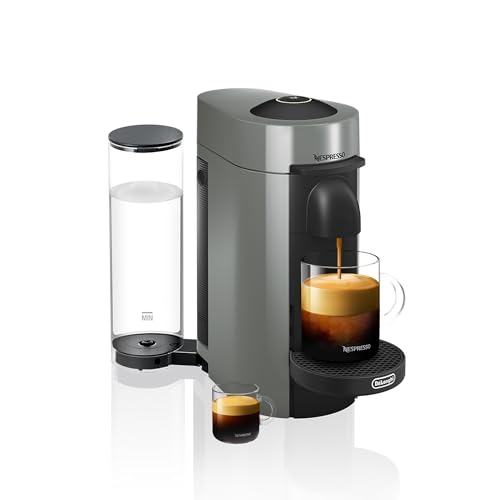
Vertuo's technical trick is centrifugal extraction: the capsule is spun at high speed rather than having water forced through it under pressure, and a barcode printed on the rim tells the machine what volume, temperature and spin speed that particular coffee wants. The practical result is the widest range of drinks of anything here — a proper 8oz mug of coffee and a small espresso-sized cup from the same machine, without the compromise where a machine designed for espresso squirts three ounces of thin water through the same capsule.
It is also the best-behaved machine on the page day to day. It heats in under a minute, ejects capsules into the bin on its own, and produces a thick foam layer that photographs like crema and does genuinely improve the texture of the drink. If your requirement is a good mug of coffee with a single button press and no thinking, this is the machine that meets it most convincingly.
The cost is the lock-in, and it is worth understanding before you buy rather than after. The barcode means the machine will not brew a capsule Nespresso has not authorised, so the third-party competition that keeps the OriginalLine cheap does not exist here. Cost per cup is the highest of these five and several times what the same coffee would cost as beans. The bin fills faster than you expect and drips if left. And the foam is not espresso crema — it is aerated coffee, and anyone moving here from a real espresso machine will notice immediately.
The most capable pod machine on the page and the most tightly locked. Excellent if you accept the capsule tax; frustrating if you resent it.
Check price on Amazon →#2Best for espresso
Breville Nespresso Original Essenza Mini Espresso Machine, Piano Black
Best for: Espresso-style drinks and milk drinks built on them, in the smallest possible footprint
What we like
- 19-bar pump forces water through the capsule, so the result is genuinely espresso-like
- OriginalLine capsules have a large third-party market, which keeps cost per cup down
- Heats in around 25 seconds and is the smallest full machine here
- Two programmable volumes — espresso and lungo — that you set once and forget
- Simple enough that there is almost nothing to go wrong
What we don't
- Only makes small drinks — there is no mug-of-coffee mode at all
- No milk system in the base machine
- Tiny water tank means refilling constantly if more than one person uses it
- Used capsules must be dropped into the bin manually on some cycles
- Still costs more per cup than grinding your own by a wide margin
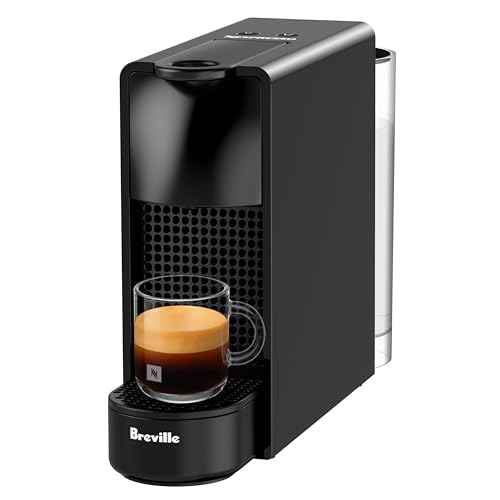
The OriginalLine system works the way espresso works: a pump forces hot water through a compacted puck under pressure. The output is not the equal of a real espresso machine with fresh coffee — the dose is small, the coffee has been sitting in a sealed capsule, and you have no control over grind or yield — but it is recognisably in the same family, with real body and a crema that comes from pressure rather than aeration.
The Essenza Mini strips that system to its minimum. It heats in about twenty-five seconds, occupies almost no counter, and has two buttons whose volumes you can reprogram in a few seconds. The important commercial point is that OriginalLine capsules are not exclusive: a large third-party market exists, including capsules from actual specialty roasters, and that competition makes this the cheapest Nespresso to run as well as the cheapest to buy.
The limitation is deliberate and total: it makes espresso and lungo, and nothing else. There is no coffee-sized drink, no milk system in the base model, and the water tank is small enough that a household of two will refill it constantly. If you want a mug of black coffee in the morning, this is the wrong machine and the Vertuo above is the right one. If what you want is a flat white before work, this plus a [separate milk frother](/best-espresso-machines-under-500) gets closer than anything else here.
The one on this page that makes something a coffee drinker recognises. Small, cheap to run by pod standards, and deliberately limited.
Check price on Amazon →#3Best K-Cup machine
Keurig K-Elite Single Serve K-Cup Pod Coffee Maker, Brushed Slate
Best for: Households where several people want different drinks and nobody wants to negotiate
What we like
- The widest capsule selection of any system by a large margin, including most major roasters
- Strength control and adjustable brew temperature, which most K-Cup machines lack
- Large reservoir means several drinks between refills
- Iced setting brews stronger and hotter to survive the dilution
- Accepts a reusable filter basket, so you can use your own coffee
What we don't
- K-Cups hold a small dose for the volume brewed, so the coffee is thin by design
- Fast contact time under low pressure extracts less than any other system here
- Plastic capsules are technically recyclable and very rarely actually recycled
- The puncture needle clogs and needs regular clearing
- Owner reports of pump failure within a few years are common
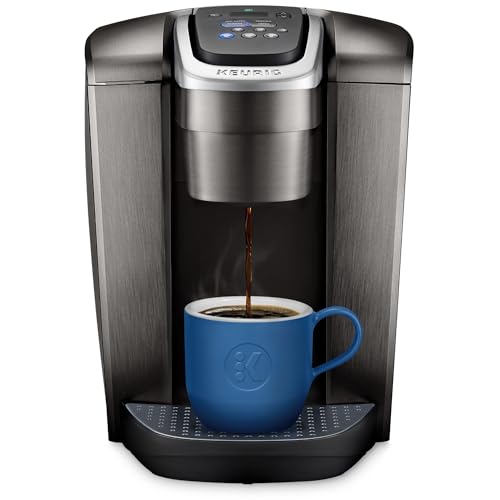
It is worth being direct about what a K-Cup is: a small dose of ground coffee, punctured top and bottom, with hot water passed through it quickly at low pressure. The dose is modest for the volume of water it has to flavour and the contact time is short, which is why K-Cup coffee reliably tastes thinner than coffee made any other way. No machine fixes that, because the constraint is in the capsule.
Within those limits the K-Elite is the right machine. It has the two controls that matter — brew strength, which slows the water down, and brew temperature, which most Keurigs fix at a compromise — and using both moves the cup from weak to acceptable. The reservoir is large enough to serve several people without refilling, the iced setting brews concentrated instead of pretending, and the selection of capsules is genuinely unmatched: nearly every roaster you have heard of packages K-Cups.
Two things are worth planning for. The puncture needle clogs with grounds and needs clearing periodically, and a clogged needle presents as weak coffee and slow brewing, so people often replace a machine that needed a paperclip. And the pump is the usual failure point, with enough owner reports of failure within a few years to weigh against the price. The redeeming feature for anyone here from the rest of this site is the reusable basket: fill it with [your own freshly ground coffee](/best-coffee-grinders) and the machine becomes a mediocre but honest drip brewer.
The best version of the weakest system. Buy it for choice and convenience, not for the coffee.
Check price on Amazon →#4Best way out of pods
Hamilton Beach FlexBrew Trio 2-Way Coffee Maker, K-Cup Pods or Grounds, Single Serve and 12-Cup Pot
Best for: A household split between someone who wants pods and someone who wants a pot
What we like
- Brews a full 12-cup pot from grounds as well as single cups from pods
- The single-serve side takes loose grounds too, so pods are optional rather than mandatory
- Costs less than most pod-only machines while doing considerably more
- Programmable carafe side with delay start
- Removes the argument in a household where one person wants pods and another does not
What we don't
- Neither half is as good as a machine that only does one thing
- Carafe side is a basic drip brewer with no certification and an unremarkable brew temperature
- Glass carafe on a hot plate, with the usual degradation after half an hour
- Bulky, with two brew heads and a wide footprint
- Owner reports of leaking from the single-serve side are the most common complaint
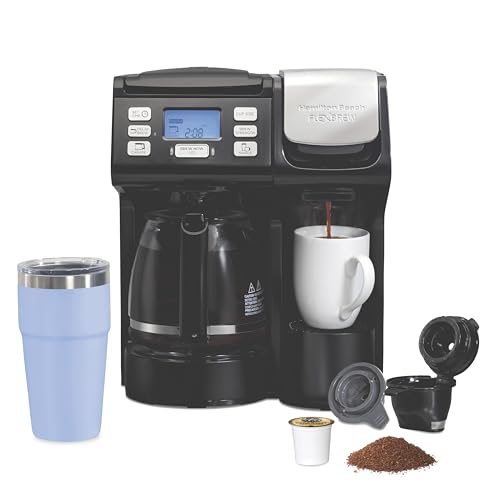
This exists to settle a specific domestic argument, and it settles it. One side takes a K-Cup and brews a mug; the other side takes grounds and brews twelve cups; the single-serve side will also take loose grounds in a basket if you would rather not buy capsules at all. For a household where one person wants convenience and another wants a pot, it is the only machine on this page that serves both without buying two appliances.
The value case is strong on paper. It costs less than most pod-only machines while covering both use cases, the carafe side is programmable with delay start, and having a pod escape hatch — the reusable grounds basket — means you are never actually locked into buying capsules. That is a meaningful advantage over everything above it.
The reason it sits fourth is that neither half is good. The carafe side is an inexpensive drip brewer with no certification and the usual mainstream brew temperature, pouring into a glass carafe on a hot plate, which means the coffee degrades in the way this whole cluster keeps warning about. The single-serve side has the same thin-cup limits as any K-Cup machine. And leaking from the single-serve head is the most frequently reported long-term problem. Buy it because it solves a household problem, not because it makes better coffee than the [dedicated drip machines](/best-drip-coffee-makers).
The compromise machine, honestly labelled. It does two jobs adequately and neither of them well.
Check price on Amazon →#5Smallest
Keurig K-Mini Single Serve K-Cup Pod Coffee Maker, Studio Gray
Best for: Dorm rooms, offices, guest rooms and anywhere counter space genuinely runs out
What we like
- Under five inches wide, which is genuinely small in a way most compact machines are not
- Cord storage in the base, so it packs away properly
- Brews 6 to 12oz, with the smaller sizes producing a stronger cup
- Cheapest machine here by a clear margin
- Nothing to program, so nothing to learn
What we don't
- No reservoir — you fill it for every single cup
- No strength or temperature control at all
- The coffee is the thinnest on this page
- Slow to heat because it heats the water you just poured in
- The drip tray and small footprint make it awkward with a large mug
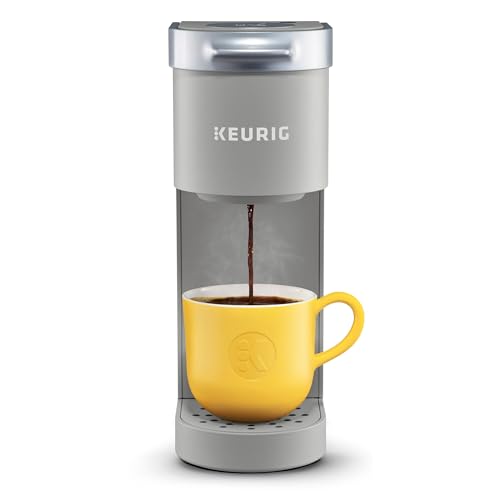
The K-Mini is a size, not a coffee maker, and judged on that it succeeds completely. It is under five inches wide, the cord stores in the base, and it will fit in places no other machine on this page will go — which for a dorm room, a small office or a guest bedroom is the entire specification.
Everything else is subtracted to get there. There is no reservoir, so you measure and pour water for every cup, which also means the machine heats from cold every time and is slower than it looks. There is no strength control and no temperature control, so the one lever you have is the volume — and brewing 6oz instead of 10oz from the same capsule is genuinely the difference between drinkable and watery. Use the small size.
What you get is the thinnest coffee on this page from the most limited machine, and it is worth saying plainly that if counter space is not actually your constraint, the K-Elite above is a much better machine for a modest amount more. The K-Mini earns its place because there are real situations where five inches is the requirement and everything else is negotiable. In every other situation, an [AeroPress and a hand grinder](/best-manual-hand-grinders) cost less, take up less room and make far better coffee.
A machine bought for its dimensions. It makes weak coffee in a very small space, and it is honest about being nothing more.
Check price on Amazon →You are buying a capsule supply, not a machine
The machine is the cheap part. Over five years the capsules will cost several times what the box did, and the system you pick determines what you can buy, from whom, and at what price.
Nespresso OriginalLine is a pressure system making espresso-sized drinks, and crucially it is open — dozens of third parties sell compatible capsules, including real specialty roasters, and that competition keeps prices honest.
Nespresso Vertuo spins the capsule and reads a barcode on its rim. That barcode is what lets it brew everything from an espresso to a large mug correctly, and it is also a lock: the machine will not brew what Nespresso has not authorised. The drinks are better and more varied; the running cost is the highest here.
K-Cups pass water quickly through a small dose. The coffee is the weakest of the three and the selection is by far the widest, with nearly every roaster you have heard of packaging them.
Decide this before you decide anything else. Capsules never cross between systems, and the machine you regret is almost always the one that makes the wrong shape of drink.
What a capsule cannot do
Three constraints are built into the format, and no machine escapes them.
The dose is fixed. You cannot use more coffee for a stronger cup — only less water, which is why brewing the smallest available size is the single most effective thing you can do on any pod machine.
The grind is fixed and was chosen months ago for a machine, not for your taste.
The coffee is old. Sealed capsules with inert gas slow staling substantially, which is genuinely clever engineering, but coffee ground in a factory and drunk a year later is not fresh coffee no matter how well it was packed.
This is why the ceiling on pod coffee sits below the floor of a decent grinder and any manual brewer. It is not a criticism of the machines; it is what the format is.
Look for the escape hatch
The most underrated feature in this category is a reusable basket that takes your own ground coffee. Both Keurigs and the Hamilton Beach here accept one, and it changes what the machine is: capsules on the mornings you are late, fresh coffee on the mornings you care, one appliance.
Nespresso is much less accommodating. Refillable OriginalLine capsules exist and work tolerably; refillable Vertuo capsules are defeated by the barcode.
Two things that will break
Almost every pod machine that dies dies of one of two causes, and only one of them is real.
The pump weakens or fails, usually after a few years of daily use, and is rarely worth repairing. This is the genuine lifespan limit and it is worth factoring into what you pay.
The puncture needle clogs with fine grounds. It presents as slow brewing and weak coffee, which reads exactly like a dying machine, and a great many working machines are thrown away because of it. Clear it with a paperclip or the tool in the box before you conclude anything.
Descaling prevents a third category entirely — these machines have small boilers and narrow water paths, and scale kills them faster than it kills a drip machine.
The honest comparison
This site’s position has not changed: if better coffee is the goal, an AeroPress or a French press with a hand grinder costs less than every machine on this page, produces considerably better coffee, and has no running cost beyond beans.
What a pod machine buys is a good-enough cup in forty seconds with nothing to clean, and that is a legitimate thing to want on a weekday morning. Buy one for that reason, with the running cost understood in advance, and pick the system that makes the drink you actually drink.
Frequently asked questions
Is pod coffee actually worse than ground coffee?
Yes, and the reasons are structural rather than snobbery. The dose is fixed and usually small for the volume brewed, the coffee was ground weeks or months before you drank it and has been degassing inside the capsule since, and you have no control over grind, ratio or contact time. A sealed capsule slows staling considerably but does not stop it. What pods buy you is consistency and speed, which are real benefits — a mediocre cup you actually make beats an excellent cup you do not.
What is the difference between Nespresso OriginalLine and Vertuo?
They are incompatible systems that happen to share a brand. OriginalLine uses a pump to force water through the capsule under pressure, makes espresso and lungo only, and has a large third-party capsule market. Vertuo spins the capsule at high speed and reads a barcode on the rim to set its own parameters, which lets it make everything from an espresso to a large mug of coffee — but the barcode means almost nothing but genuine Nespresso capsules will work. Capsules never cross between the two.
Why is K-Cup coffee so weak?
Because of the capsule, not the machine. A K-Cup contains a modest dose of coffee and the machine passes eight to twelve ounces of water through it quickly at low pressure, so there is not enough coffee and not enough contact time to make a strong cup. The two effective fixes are brewing the smallest volume the machine offers, which concentrates what you get, and using a machine with a strength setting that slows the water down. Neither turns it into good coffee.
Can I use my own coffee in a pod machine?
In the K-Cup machines, yes and it is worth doing — a reusable filter basket costs very little, takes your own freshly ground coffee, and turns the machine into a modest but honest single-cup brewer. In Nespresso machines it is much harder: refillable OriginalLine capsules exist and work reasonably if you are patient, and refillable Vertuo capsules are defeated by the barcode system. Any machine that accepts your own grounds is worth more than its specification suggests.
What actually breaks on these machines?
Two things dominate the owner reports. The pump, which either weakens or fails outright and is usually not economically repairable — expect a few years of daily use rather than a decade. And the puncture needle, which clogs with fine grounds and presents as slow brewing and weak coffee; that one is fixable in a minute with a paperclip and is the reason a lot of working machines get thrown away. Descaling regularly prevents a third category of failure entirely.
How bad is the waste, really?
It depends on the system and on you. Nespresso's capsules are aluminium and the company runs a genuine recycling return scheme, so they can be recycled if you actually collect and post them. K-Cups are plastic with a foil lid and a paper filter fused together; they are technically recyclable after disassembly and the overwhelming majority go to landfill. Either way you are producing a container per cup, which is the honest cost of the convenience.
Should I buy a pod machine at all?
If speed and zero effort are the actual requirement — a busy morning, an office, a guest room — then yes, and the right one is the machine matched to the drink you want. If what you want is better coffee, no: an AeroPress or a French press with a hand grinder costs less than any machine here, makes considerably better coffee, and has no running cost beyond the beans. Be honest about which of those two you are solving for.